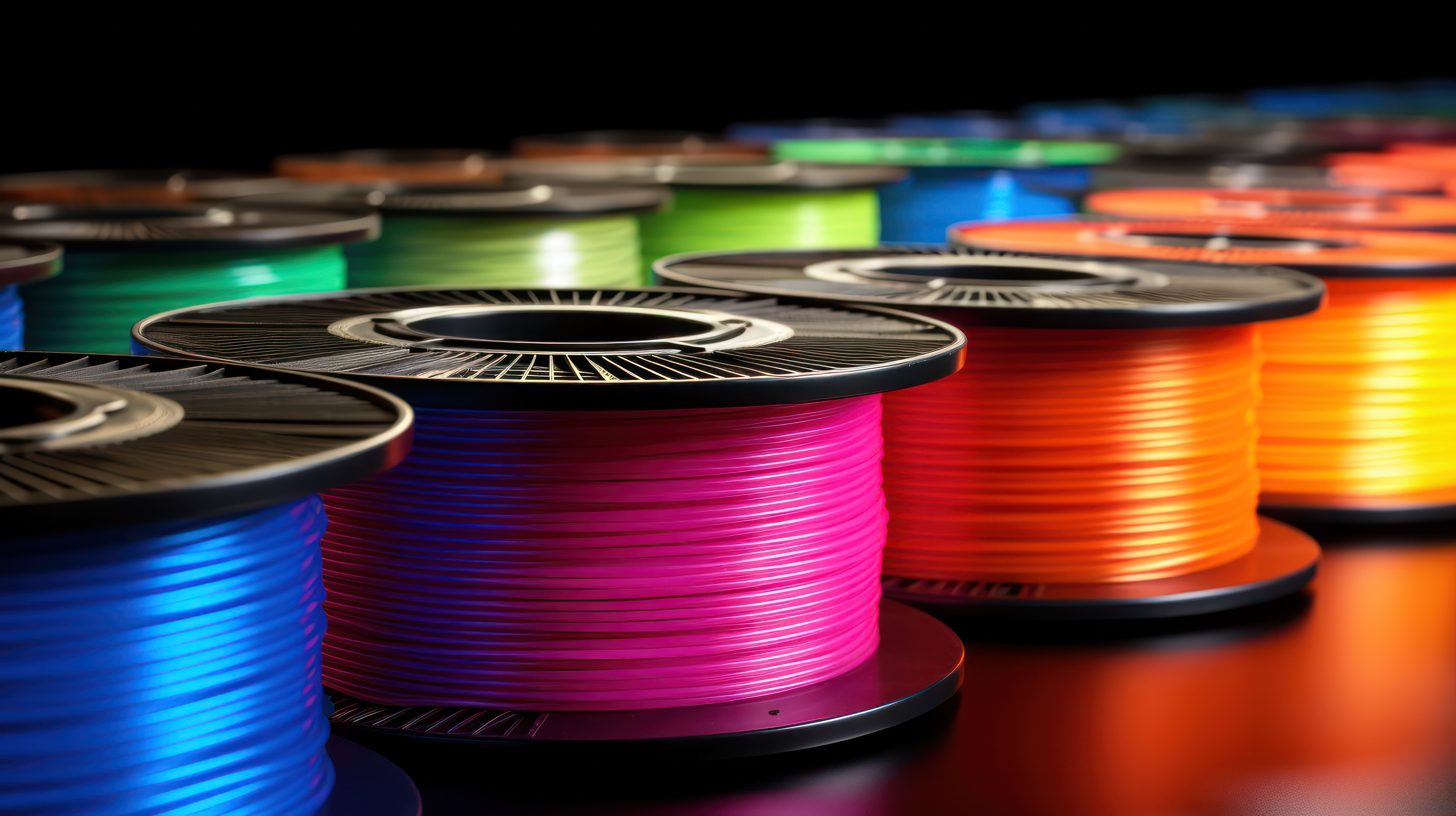
Quick answer
Brittle filament that snaps easily is almost always caused by moisture absorption, since PLA, PETG, and nylon are all hygroscopic and pull water from the air. UV exposure, temperature swings, tight spool winding, and simply old or low-quality stock make it worse. Dry the filament at the correct temperature for the material, then store it in an airtight container with desiccant to stop it from happening again.
Why filament turns brittle
Most filaments are polyesters or polymers that absorb ambient moisture over time. Water molecules work their way into the plastic and, especially under printing heat, trigger hydrolysis — a reaction that breaks the long polymer chains into shorter, weaker fragments. Shorter chains mean less flexibility, so the strand loses its ability to bend and instead cracks or snaps. Sunlight and UV exposure add a second failure path: UV energy breaks down polymer bonds directly, which is why filament left near a window or stored in a garage with skylights degrades faster. Mechanical stress from being tightly wound on a spool for months, plus normal aging in cheaper resin blends, rounds out the usual causes.
1. Confirm it’s moisture, not the material itself
Before troubleshooting further, check for the classic signs of wet filament: popping or hissing sounds at the nozzle, extra stringing, a rough or bubbly print surface, and the filament snapping cleanly when bent sharply rather than deforming. If a spool has been open for more than a few weeks without airtight storage, moisture is the likely culprit.
2. Dry the filament at the right temperature
Use a filament dryer, dedicated dry box, or a food dehydrator with adjustable temperature control. Approximate settings: PLA 45–55°C for 4–6 hours, PETG 60–65°C for 6–8 hours, ABS/ASA 65–75°C for 4–6 hours, and nylon 70–80°C for 8–12 hours or longer since it holds moisture the most stubbornly. An oven works in a pinch, but only if it can hold a low, steady temperature — overshooting softens or warps the spool.
3. Store filament in an airtight container with desiccant
Once dried, seal the spool immediately in an airtight container or a resealable vacuum bag with fresh silica gel desiccant packs. Opened filament left in normal room air can start absorbing enough moisture to turn brittle in as little as a few weeks to a few months; sealed with desiccant, it can last years. A hygrometer inside the container helps confirm humidity is staying low, ideally under 20–30%.
4. Keep it dry while printing
Even correctly dried filament can reabsorb moisture mid-print in humid environments. Printing directly from a dry box with a feed port, or at minimum keeping the spool covered and away from open air during long prints, prevents it from picking moisture back up before it reaches the nozzle.
5. Avoid heat, sunlight, and temperature swings in storage
Keep spools away from windows, garages, attics, or anywhere that sees direct sun or big daily temperature changes. A cool, dark, climate-stable space — ideally 15–25°C — slows down both UV degradation and the moisture cycling that comes from temperature swings changing local humidity.
6. Handle filament gently
Avoid sharp bends, kinks, or pulling the strand tight when loading it, especially with filament that has been sitting for a while. Old filament that’s already lost some flexibility is far more likely to snap under mechanical stress than fresh stock, so unspool it in gentle loops rather than yanking it straight.
7. Replace filament that won’t recover
If a spool has visibly yellowed, feels chalky, or keeps snapping even after a proper drying cycle, the polymer chains have likely degraded too far to fully restore. Drying can improve printability, but it won’t fully reverse chemical breakdown. At that point, it’s usually faster and cheaper to retire the spool and start with fresh filament stored correctly from day one.
Frequently asked questions
Can brittle filament be fixed permanently, or does it always come back?
Drying restores enough flexibility to print successfully, but if the filament goes back into humid open air it will absorb moisture again. Pair drying with airtight, desiccant storage to keep it usable long-term.
Is PETG or nylon more prone to brittleness than PLA?
Nylon is the most hygroscopic and can become unprintable within hours of exposure; PETG absorbs moisture faster than PLA and shows symptoms sooner. PLA is comparatively slower to degrade but still becomes brittle after weeks to months of poor storage.
Does brittle filament affect print strength, or just the raw spool?
Both. A spool that snaps while loading is inconvenient, but moisture-degraded filament also prints weaker parts — layers can be more porous and prone to cracking, since the same hydrolysis that embrittles the strand weakens the printed plastic too.
How can I tell if my filament is dry enough to print?
Bend a short length sharply: dry, healthy filament flexes or forms a smooth arc before breaking, while wet or embrittled filament snaps cleanly with little bend. A hygrometer in your storage container reading under 30% humidity is also a good practical target.